

The Modern CHRO Episode 6: The Future CHRO’s Most Critical Responsibility
Listen to Episode 6: “The Future CHRO’s Most Critial Responsibility” HERE
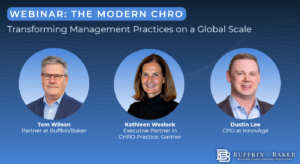
Partner Tom Wilson interviews two HR Executive experts to discuss their perspectives on the evolving role. Our panel includes:
- Dustin Lee, Chief People Officer, Innovage
- Kathleen Weslock, Executive Partner in CHRO Practice, Gartner
For years, HR leaders have fought for a seat at the executive table. Today’s CHROs have largely won that battle.
The challenge now is what comes next.
As organizations navigate technological disruption, changing workforce dynamics, and increasing pressure to deliver business results, the expectations placed on chief human resources officers continue to expand. The future CHRO will be asked to do far more than attract talent, develop leaders, and shape culture. They will be expected to influence business strategy itself.
When Tom Wilson posed the question, “What is the future CHRO’s most critical responsibility?” panelists Dustin Lee and Kathleen Wilson offered answers that approached the issue from different perspectives but ultimately pointed in the same direction: the most effective CHROs of the future will be enterprise leaders first and HR leaders second.
From Managing Talent to Allocating Capability
Dustin Lee believes one of the most important shifts ahead involves how organizations think about talent itself.
Historically, workforce planning has focused on hiring, retention, and development. Going forward, however, organizations will need leaders who can continuously align talent with business priorities as those priorities evolve.
Lee described a future where CHROs use skill-based workforce strategies, internal talent marketplaces, and new technologies to move organizational capacity toward the areas creating the greatest value. The challenge is no longer simply developing talent. It is deploying talent effectively and at scale.
This broader view positions the CHRO as a steward of organizational capability, responsible for ensuring the right skills are available in the right places at the right time.
The Business Case for Better Leadership
Lee also pointed to manager effectiveness as an area that deserves significantly more attention.
Managers influence employee engagement, retention, productivity, performance, and culture every day. Yet organizations often treat management quality as an HR issue rather than a business issue.
As expectations continue to rise, future CHROs will be challenged to build more disciplined approaches to selecting, developing, and evaluating managers. Organizations that excel in this area will likely gain a significant competitive advantage.
Why Financial Fluency Matters
While Lee focused on organizational capability, Kathleen Wilson highlighted another critical requirement: business acumen.
Wilson shared how a mentoring relationship with her CFO helped transform her understanding of finance. After sitting in on calls and discussions, she intentionally spent time unpacking financial concepts, asking questions, and learning how executive leaders viewed decisions through a financial lens.
The experience reinforced a belief she holds strongly today.
If CHROs aspire to influence business strategy and serve on boards, they must understand the financial drivers behind organizational performance.
Her message was direct: leaders who want a seat at the table must be able to engage in conversations about growth, risk, investment, and financial performance with the same confidence they bring to discussions about talent and culture.
The CHRO’s Next Evolution
The discussion ultimately highlighted a broader transformation taking place across the profession.
Tomorrow’s CHRO will still champion people, culture, and leadership development. But they will also increasingly shape how organizations deploy talent, govern emerging technologies, strengthen management capability, and connect workforce decisions to business outcomes.
In other words, the future belongs to CHROs who understand both people and the business itself.
The role is expanding beyond traditional HR boundaries. The leaders who embrace that shift will be best positioned to influence strategy, guide change, and help their organizations succeed in an increasingly complex world.
To learn more about our HR functional practice, click here.
Follow our LinkedIn to stay up to date on new thought leadership.