

The Modern CHRO: Episode 4
The Modern CHRO: Leading People Strategy at the Enterprise Level
As organizations continue to navigate rapid change, the role of the Chief Human Resources Officer has evolved well beyond traditional HR leadership. Today’s CHRO operates at the center of business strategy, organizational design, culture, and execution — serving as a key partner to the CEO and executive leadership team.
As part of Buffkin/Baker’s ongoing Modern CHRO Series, we sit down with senior HR leaders to explore how the role is changing and what effective people leadership looks like at the enterprise level.
Listen to Episode 4: “Leading People Strategy at the Enterprise Level” HERE
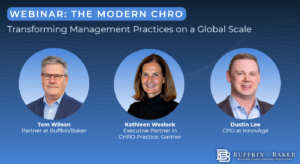
Partner Tom Wilson interviews two HR Executive experts to discuss their perspectives on the evolving role. Our panel includes:
- Dustin Lee, Chief People Officer, Innovage
- Kathleen Weslock, Executive Partner in CHRO Practice, Gartner
A Conversation on the Expanding Role of the CHRO
In this installment of the series, the discussion centers on how today’s CHROs are balancing strategic leadership with operational rigor while guiding their organizations through complexity. The conversation highlights how HR leaders are increasingly expected to influence decisions far beyond the people function — from growth strategy and transformation initiatives to leadership alignment and culture.
Rather than operating behind the scenes, modern CHROs are stepping into visible, enterprise‑wide leadership roles.
Key Themes from the Conversation
The CHRO as a Strategic Business Partner
A central theme of the discussion is the CHRO’s role as a true strategic partner to the executive team. Effective CHROs bring a deep understanding of the business alongside their expertise in talent and culture, allowing them to contribute meaningfully to decisions that shape long‑term performance.
Aligning People Strategy with Business Outcomes
The conversation reinforces the importance of aligning people strategy with organizational goals. As companies evolve, CHROs play a critical role in ensuring that structure, leadership, and talent strategies support where the business is headed — not where it has been.
Leading Through Change and Complexity
Change management remains a defining responsibility of the modern CHRO. Whether navigating growth, restructuring, or cultural shifts, HR leaders are expected to help organizations remain aligned, engaged, and resilient during periods of uncertainty.
The Human Side of Executive Leadership
While strategy and systems are essential, the discussion also underscores the importance of empathy and leadership presence. The most effective CHROs combine data‑driven decision‑making with a strong understanding of people — creating environments where leaders and teams can perform at their best.
Why This Matters Now
As expectations of HR leadership continue to rise, CHROs are being asked to operate with greater influence, accountability, and visibility than ever before. Organizations that view HR as a strategic function — rather than a support role — are better positioned to navigate disruption and sustain performance over time.
Conversations like this one highlight how leading CHROs are redefining the role and demonstrating the value of people leadership at the highest levels of the organization.
To learn more about our HR functional practice, click here.
Follow our LinkedIn to stay up to date.